
Ageing well: which habits really matter?
What the WHO, UK guidance and the best studies say about the habits that help you keep your abilities as you get older, and what remains uncertain.
Written by Genio’s editorial team
Writing and editing
Scientific review pending
Genio’s scientific team · in the French version
16 min read32 sources
In short
For the WHO, ageing well means developing and keeping the abilities that let you do what matters to you. Physical activity is the habit whose effects on these abilities are best established by trials, especially muscle strengthening and, from 65, balance training. A diet rich in plants, enough sleep, social ties, not smoking and drinking little alcohol complete the foundation. Biological age tests remain research tools.
Contents
Walking without thinking about it, carrying the shopping, seeing friends, sleeping well: as the years go by, these ordinary things become what matters most. Between conflicting advice and claims about “biological age”, it is hard to know where to put your energy. This guide separates what guidelines and trials establish from what has only been observed and what is still a matter for research.
What does “ageing well” actually mean?
For the WHO, ageing well, which it calls “healthy ageing”, is the process of developing and maintaining the functional ability that enables well-being in older age: being able to be and do what you have reason to value [1]. Being free of every condition is not required; what counts is what you can still do day to day [1].
The WHO separates two ideas. Intrinsic capacity covers a person’s physical and mental capacities: the ability to walk, think, see, hear and remember. Functional ability comes from the meeting of that capacity with the environment, meaning the home, the community and wider society [1]. This guide is about the first: the habits that help you keep your capacities.
The stakes show in the statistics. In England, in 2020 to 2022, people aged 65 could expect about 10.5 more years (men) and 10.7 more years (women) free from a long-lasting condition that limits day-to-day activities, according to the Office for National Statistics [2]. Over the same period, total life expectancy at 65 across the UK was 18.3 years for men and 20.8 years for women [3]. Taken together, these figures suggest that a large share of the years after 65 is lived with some limitation in daily life, as reported by people themselves.
Is it down to heredity?
How much of lifespan is inherited is debated. Using family trees covering hundreds of millions of people born in the 19th and early 20th centuries, one study puts it well below 10% [4]. A 2026 analysis of twin cohorts, which corrects for deaths from external causes such as accidents and infections, puts it at over 50% instead [5]. Either way, heredity does not explain everything: environment and habits count too.
What kind of physical activity helps you age well?
To age well, aim for physical activity that combines three elements. The WHO recommends that people over 65 do 150 to 300 minutes of moderate-intensity activity a week (or 75 to 150 minutes of vigorous activity), muscle strengthening on at least two days, and varied activities for balance and strength on at least three days [6].
The UK physical activity guidelines (2019) say much the same for older adults: be active every day, aim for at least 150 minutes of moderate activity a week, building up gradually, do activities that improve or maintain muscle strength, balance and flexibility on at least two days a week, and break up long periods of sitting with light activity, or at least by standing [7]. Both stress that some activity is better than none, and that even light activity brings benefits compared with sitting [6, 7].
| Type of activity | WHO (2020) | UK guidelines (2019) |
|---|---|---|
| Aerobic | 150 to 300 minutes a week of moderate intensity, or 75 to 150 minutes of vigorous intensity | At least 150 minutes a week of moderate intensity, building up gradually, or 75 minutes of vigorous activity for those already active |
| Muscle strengthening | At least 2 days a week, all major muscle groups | At least 2 days a week, together with balance and flexibility |
| Balance | Varied activity combining balance and strength, at moderate intensity or more, on at least 3 days a week | Part of the activities on at least 2 days a week |
| Sitting | Limit it and replace it with activity of any intensity | Break up long periods with light activity, or at least by standing |
Why muscle deserves special attention
Muscle strength declines from midlife. Grip strength measurements from nearly 50,000 people aged 4 to 90 in Great Britain show that strength peaks, on average, somewhere between about 26 and 42 depending on sex, holds until midlife, then declines [8]. Around 75, strength falls by 2.5% to 4% a year depending on the study, two to five times faster than muscle mass [9]: we lose strength faster than we lose muscle.
The good news is that muscle responds to training, even late in life. A meta-analysis of 22 randomised trials in people aged 75 and over found that strength training increases muscle strength and size; the strength gain was also seen after 80, and few adverse events were reported [10].
You do not need a gym: getting up from a chair several times in a row, climbing stairs, carrying loads, using resistance bands or light weights, heavy gardening. The WHO recommends working all the major muscle groups at moderate intensity or more [6]. Start gently and build up gradually.
Balance, to stay independent
Balance can be trained too, and it is one of the areas where the evidence is strongest. A Cochrane review of 108 randomised trials (23,407 people aged 60 and over living at home, average age 76) concludes, with high certainty, that exercise reduces the number of falls by 23%. Balance and functional exercise programmes reduce them by 24%, and those that add strength training probably by 34%; the effect of walking alone or of strength training alone on falls remains uncertain [11].
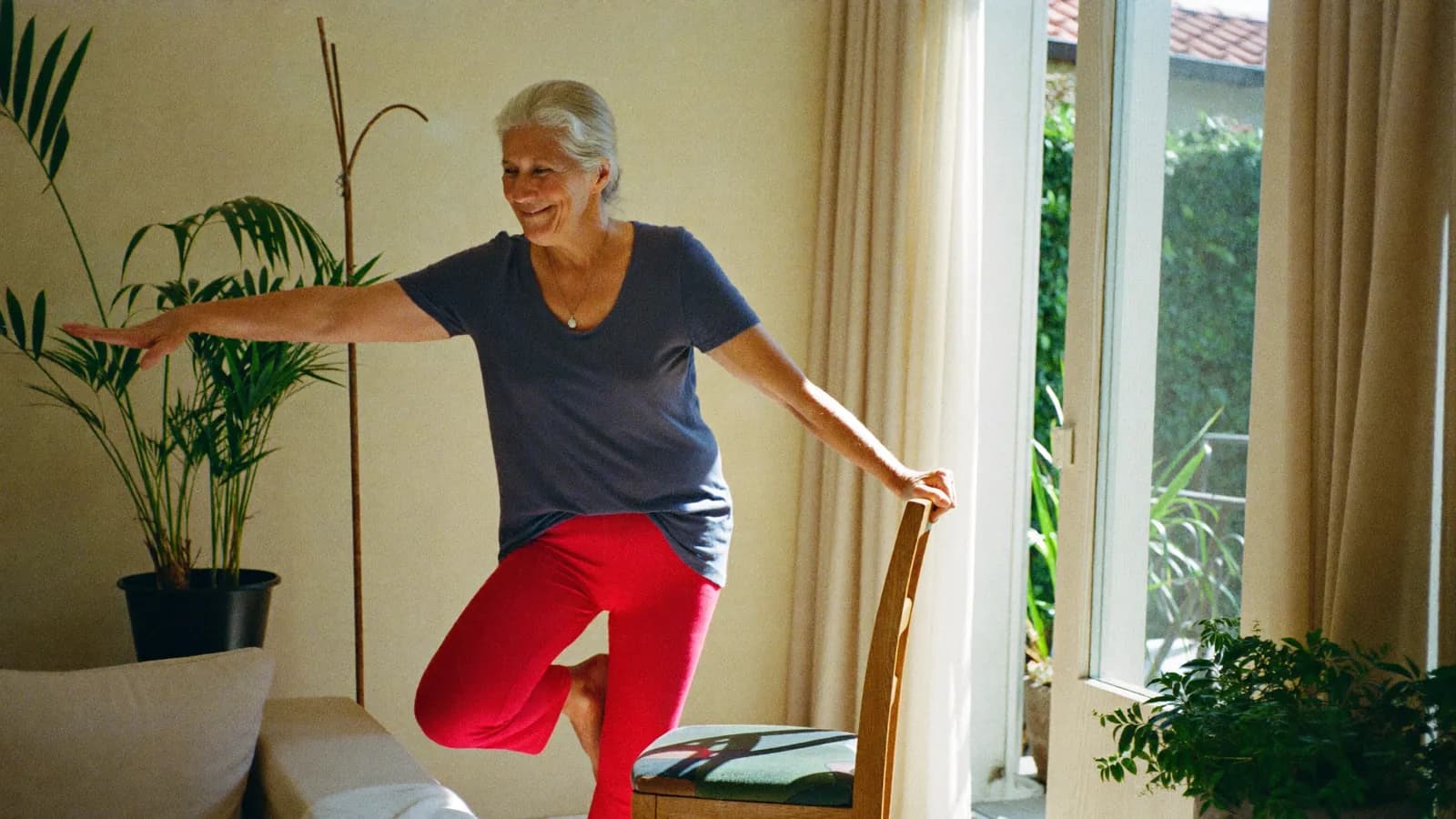
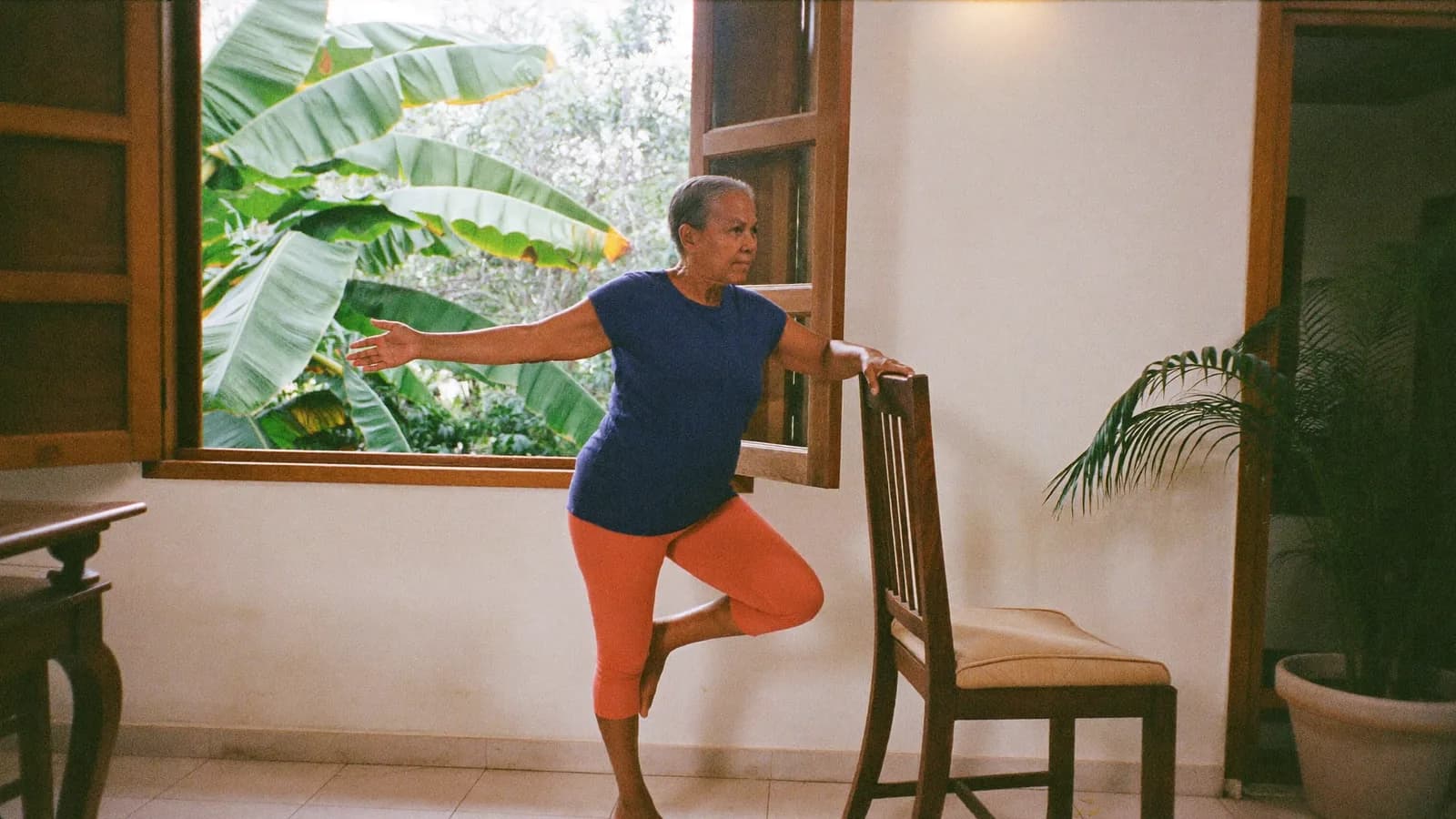
Standing on one leg while holding on to something stable, walking heel to toe, getting up from a chair without using your hands, tai chi: these simple exercises can be done at home or in a group. If you fall regularly or feel frail, the UK guidelines suggest that new exercises may be best supervised at first by a trained professional, such as a physiotherapist [7]. You will find more ideas in our physical activity section.
Key takeaway
After 65, the WHO recommends combining aerobic activity, muscle strengthening and balance [6]. Muscle responds to training even after 75 [10], and in trials, balance programmes reduce the number of falls [11]. Start gently and, if you fall regularly or feel frail, new exercises may be best supervised at first [7].
What should you eat to age well?
To age well, what counts most is your overall diet. The NHS Eatwell Guide advises at least five portions of a variety of fruit and vegetables a day, higher-fibre or wholegrain starchy foods, some beans, pulses, fish, eggs and other protein foods, two portions of fish a week (one oily), and unsaturated oils in small amounts [12].
Older adults in the UK eat, on average, more saturated fat, free sugars and salt than recommended, and less fruit and vegetables, fibre and oily fish, according to the Scientific Advisory Committee on Nutrition (SACN) [13].
Studies on ageing point the same way, with a caveat worth knowing. In two large US cohorts (105,015 participants, two thirds of them nurses, followed for up to 30 years), the closer people’s eating was to plant-rich dietary patterns, the more likely they were to “age well”. The study defined this as reaching 70 free of major chronic conditions, with good physical, cognitive and mental function. Comparing the fifth of participants closest to these patterns with the fifth furthest from them, odds ratios ranged from 1.45 to 1.86 depending on the pattern [14].
Fruit, vegetables, wholegrains, nuts, pulses, unsaturated fats and low-fat dairy were linked to better odds; trans fats, salt, sugary drinks and red or processed meat to worse ones [14]. This is an observational study: it shows an association, not cause and effect. SACN likewise found very little trial evidence on dietary patterns and muscle or bone outcomes in older adults, and judged the evidence too mixed to draw conclusions [13]. Pulses and wholegrains are also good sources of fibre: see how much fibre to aim for each day.
Protein: do you need more as you get older?
Here, official bodies do not say the same thing. The UK reference nutrient intake for protein is 0.75 g per kilo of body weight per day for adults, with no separate value for people over 65 [13]. The European Food Safety Authority (EFSA) sets 0.83 g per kilo per day for all adults, older adults included, because the data do not show a different requirement [15]. An expert group, PROT-AGE, suggests at least 1.0 to 1.2 g for people over 65 [16]. Reference values such as the UK and EFSA figures are set to cover the needs of almost everyone in a population: they are collective benchmarks, not individual targets.
| Body | Benchmark | Type of benchmark |
|---|---|---|
| United Kingdom (reported by SACN, 2021) | 0.75 g per kilo of body weight per day | Population reference for adults, with no separate value after 65 |
| EFSA (2012) | 0.83 g per kilo of body weight per day | Population reference, the same for all adults |
| PROT-AGE group (2013) | At least 1.0 to 1.2 g per kilo of body weight per day | Position of an expert group, after 65 |
Above all, protein does not work on its own. A 2022 meta-analysis of 74 randomised trials found that eating more protein brought only a small extra gain in muscle mass, in people doing strength training, and a minimal effect on physical function tests [17]. SACN’s 2021 review found no significant effect of protein supplements on muscle strength, muscle mass or physical performance in older adults, and no added benefit when they were combined with exercise, compared with exercise alone [13].
In practice, vary your protein sources over the week: pulses, fish, eggs, dairy, poultry, nuts. If you have been told your kidney function is markedly reduced, ask your GP before eating more protein: the PROT-AGE group itself makes this exception [16].
Supplements and fasting: what we know
Two widely used supplements, vitamin D and omega-3s, showed no benefit in a large trial in fit older people. In that European trial of 2,157 people aged 70 and over, with no serious problems in the previous five years and followed for three years, they improved neither physical performance nor cognitive function [18].
Intermittent fasting, in its various forms, does about as well as conventional calorie reduction on body weight and some markers, according to 99 trials in 6,582 adults, most of them followed for less than 24 weeks [19]. These trials do not measure functional ability, and their authors call for longer trials [19]. Before taking a supplement or fasting for long periods, talk to your GP or pharmacist.
Key takeaway
What counts most is your overall diet, built around vegetables, fruit, pulses and wholegrains [12]. Eating more protein brought only a small gain in muscle mass, in people doing strength training [17], and vitamin D or omega-3 supplements did not improve physical performance in fit older people [18].
Does sleep change as you get older?
Sleep does change with age. According to a meta-analysis of 65 studies (3,577 people aged 5 to 102), it becomes lighter on average, with less deep sleep and more waking in the night; after 60, only sleep efficiency keeps falling [20]. The need for sleep, however, does not go away.
Sleep efficiency is the share of time in bed spent asleep. A US expert panel recommends 7 to 8 hours a night after 65, compared with 7 to 9 hours for younger adults, while stressing that needs vary from person to person [21]. To work out how much to aim for and how to protect your nights, read our article on how many hours of sleep you really need. If your nights stay difficult and weigh on your days, talk to your GP.
Why do social connections matter so much?
Social connections matter because isolation weighs on physical and mental well-being. According to the WHO Commission on Social Connection, about one person in six worldwide experienced loneliness between 2014 and 2023, and an estimated 25% to 34% of older people are socially isolated [22].
- 1 in 6Approximate share of people worldwide who experienced loneliness between 2014 and 2023 (WHO, 2025) [22]
- 25% to 34%Estimated share of older people who are socially isolated (WHO Commission on Social Connection, 2025) [22]
- 11.8%Share of people over 60 who experience loneliness, against 20.9% among 13 to 17-year-olds (WHO, 2025) [22]
The WHO distinguishes loneliness, the painful feeling of a gap between the connections you want and those you have, from social isolation, an objective lack of contact with others [22]. Contrary to a common belief, loneliness is less frequent after 60 (11.8%) than in adolescence (20.9% among 13 to 17-year-olds) [22]. The report draws on studies from many regions of the world and judges the link between social disconnection and higher mortality to be probably causal [22]. The UK physical activity guidelines add that, in a still very limited number of studies, becoming more active can reduce loneliness and social isolation [7].
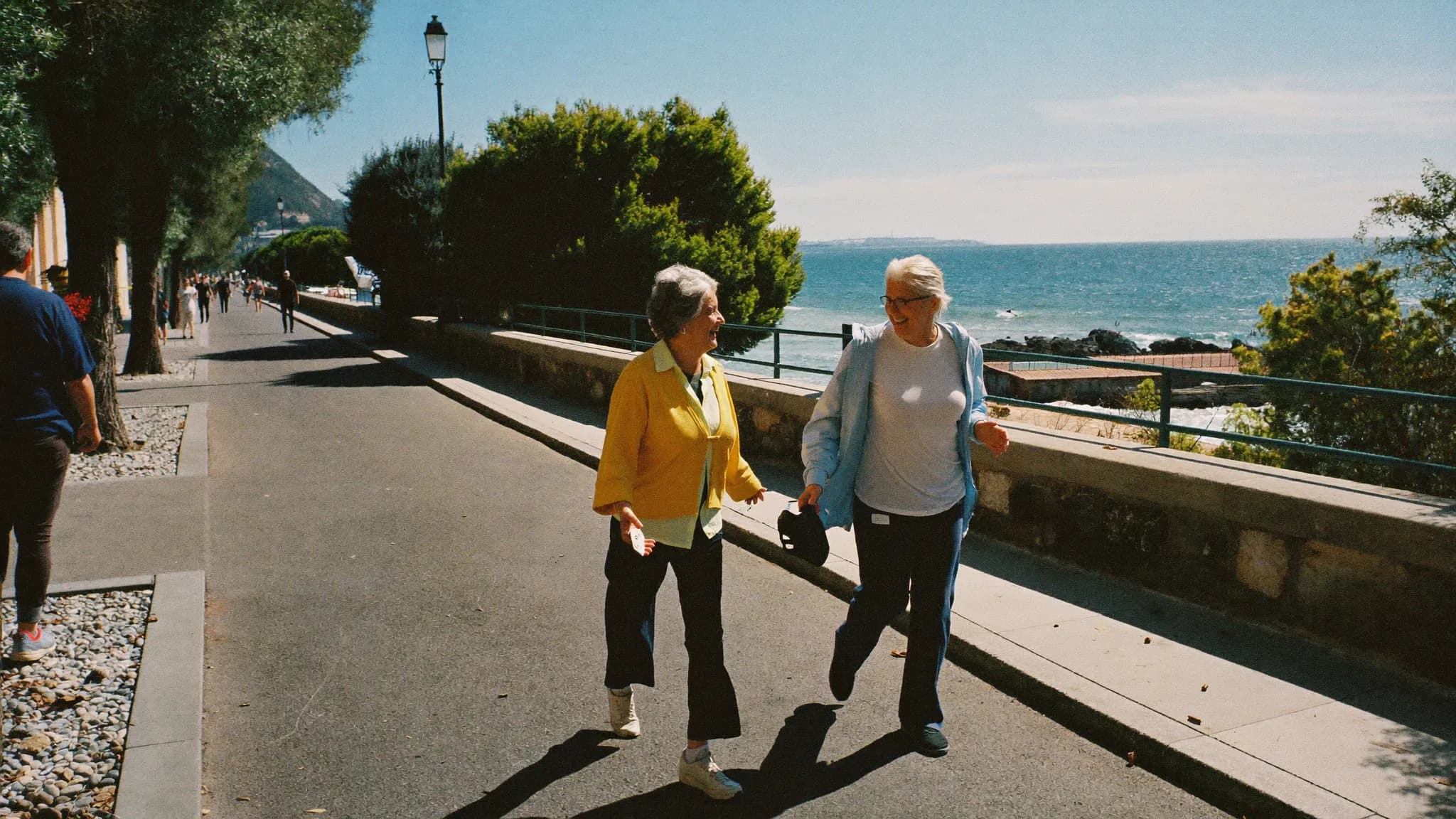
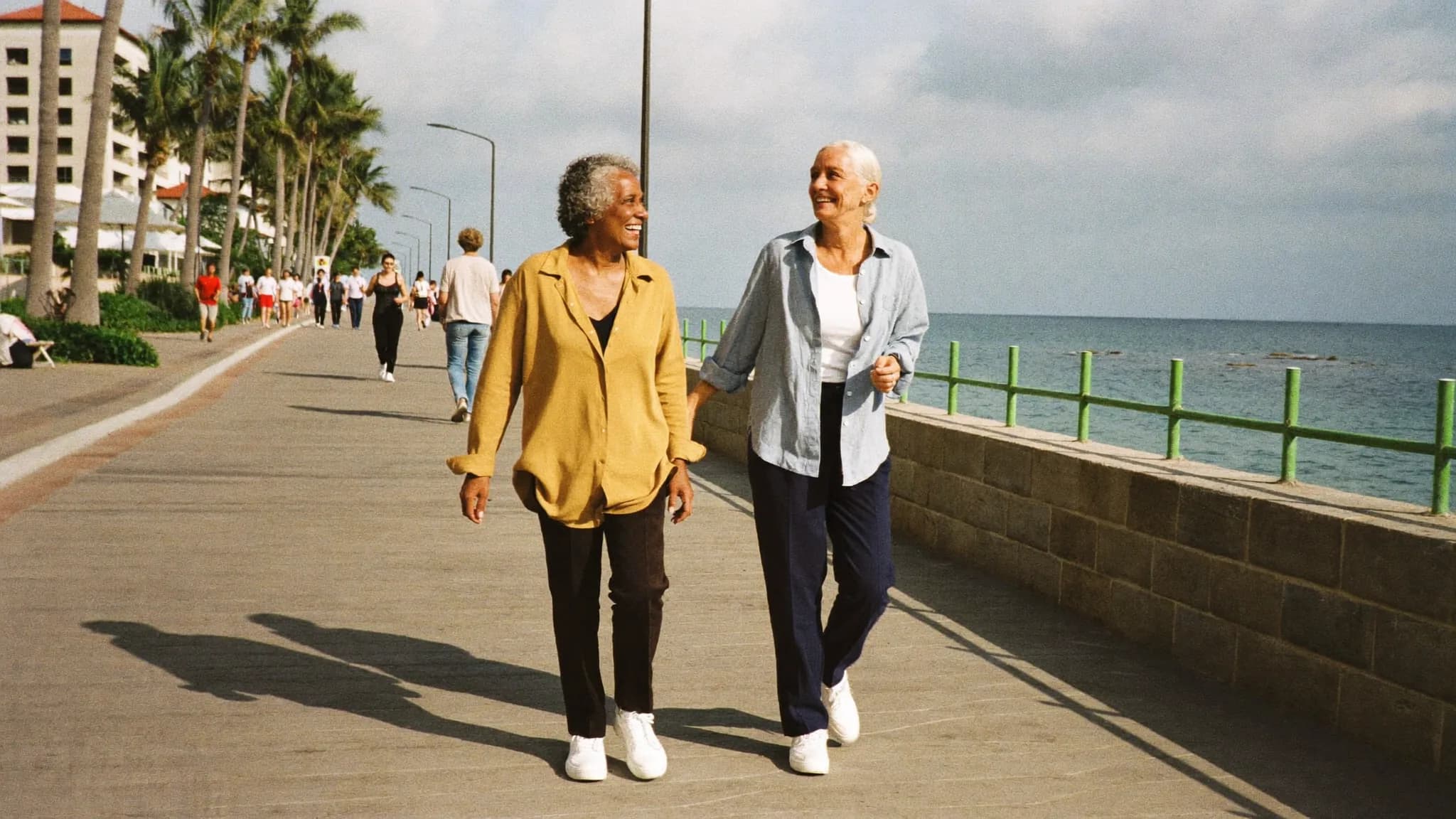
Small gestures count, the WHO says: reaching out to a friend, putting your phone away during a conversation, greeting a neighbour, joining a local group, volunteering [23]. Walking with others, dancing or joining a group class lets you combine two habits in one.
Smoking and alcohol: what do the authorities advise?
Smoking and alcohol remain two major levers. Stopping smoking brings benefits at any age, and getting support clearly improves the chances of success [24, 25]. On alcohol, WHO Europe points out that the risk starts with the first drop: the less you drink, the safer it is [26].
Tobacco kills more than 7 million people every year worldwide, according to the WHO [24]. It is never too late to stop: the WHO describes benefits for people who stop at around 30, 40, 50 and even 60 [25]. Counselling, combined with medication where needed, can more than double the chances of quitting successfully [24]. In the UK, local NHS stop smoking services are free, and in England the Smokefree National Helpline is on 0300 123 1044.
On alcohol, UK low-risk guidance advises not drinking more than 14 units a week on a regular basis, spreading drinking over three or more days, and having several drink-free days each week if you want to cut down; one unit is 8 g of pure alcohol [27]. These are not safe levels: WHO Europe states that no amount of alcohol is without risk [26].
What does a “biological age” test really measure?
A “biological age” test estimates an age from DNA methylation, chemical marks whose pattern changes over the years. These “epigenetic clocks” are valuable research tools for comparing groups, but they remain imprecise for an individual, and their usefulness for guiding your choices has not been shown [28, 29].
Methylation is the addition of small chemical groups at certain sites on DNA; these marks influence or reflect gene activity without changing the DNA sequence [28]. The first clocks, published in 2013, were trained to predict chronological age from 71 to 353 DNA sites [28]. Later ones, such as PhenoAge (2018) and GrimAge (2019), were trained on age-related blood markers or on the risk of death, and pick up, for example, the imprint of smoking [28]. Others, such as DunedinPACE (2022), estimate a pace of ageing, calibrated on changes in 19 indicators of how well the body’s organ systems work, tracked over two decades [30].
Three limits explain researchers’ caution. Measurement is noisy: two repeated analyses of the same sample can differ by up to 9 years with six well-known clocks [31]. Methods disagree: in 964 middle-aged people followed in New Zealand, eleven measures of biological ageing agreed poorly with one another [32]. Finally, the first clocks predict mortality at the level of a population, not of an individual [28]; there is still no consensus on how to validate these markers before routine use, and whether they can improve how people feel and function remains to be shown in trials [29].
If you have had such a test, see the result as research information, not a verdict: it does not change the recommended habits. The capacities the WHO puts at the centre can be observed directly: walking, thinking, seeing, hearing, remembering [1]. For more, see our data and biomarkers section.
Where should you start without overhauling everything?
To start, a small habit kept up over time beats an ambitious plan dropped after a few weeks. The WHO puts it simply: some physical activity is better than none [6]. Pick one habit for the coming weeks, then add the others one by one, at your own pace, starting with whatever feels easiest.
- Move a little more every day (walking, cycling, stairs, gardening), working gradually towards the guidelines [6, 7].
- On two days a week, work your muscles; after 65, add balance exercises on at least three days [6].
- Fill your plate with vegetables, fruit, pulses and wholegrains, with varied sources of protein [12].
- Protect your sleep and your connections: a walk with a friend, a phone call, a group activity.
- If you smoke, get support to stop; if you drink alcohol, drink less [24, 26].
- Tell your GP about changes in your daily life: a fall, worse eyesight or hearing, new difficulty walking.
What we know, what remains uncertain
What we know
- Official recommendationThe WHO recommends that people over 65 do 150 to 300 minutes of moderate activity a week, muscle strengthening on at least two days and balance and strength activities on at least three days [6].
- Meta-analysisIn people aged 60 and over living at home, exercise programmes, especially those that train balance, reduce the number of falls (Cochrane review, high-certainty evidence) [11].
- Meta-analysisStrength training increases muscle strength and size even after 75, according to 22 randomised trials [10].
- Official recommendationUK guidance favours fruit and vegetables, wholegrains, pulses and fish, and older adults in the UK eat less fruit, vegetables, fibre and oily fish than recommended [12, 13].
- Official recommendationStopping smoking brings benefits at any age, and counselling, with medication where needed, can more than double the chances of success [24, 25].
- Observational studiesIn large cohorts, plant-rich dietary patterns are associated with better odds of ageing well; cause and effect is not established [14].
- Observational studiesLoneliness and social isolation are associated with poorer physical and mental well-being [22].
What remains uncertain
- Observational studiesHow much of lifespan is inherited is debated: under 10% according to very large family trees, over 50% according to a twin analysis published in 2026 [4, 5].
- Preliminary dataBiological age tests based on epigenetic clocks remain research tools: noisy measurement, methods that agree poorly and no validated use for individuals [28, 29, 31, 32].
- TrialsProtein needs after 65 are debated: 0.75 g per kilo a day in the UK, 0.83 g for EFSA, at least 1.0 to 1.2 g for an expert group. Eating more protein brings at most a small gain in muscle, mainly alongside strength training [13, 15, 16, 17].
- TrialsIn fit people aged 70 and over, three years of vitamin D or omega-3s did not improve physical performance or cognitive function [18].
- Meta-analysisIntermittent fasting has mostly been studied over short periods, on body weight and a few markers; its effects on functional ability and in the long term are not known [19].
To do this week
- One action
- This week, do two short strength sessions (getting up from a chair several times, climbing stairs, carrying light loads) and, on three days, a few minutes of balance work next to something stable, such as standing on one leg.
- What you can notice
- Note down your sessions and what feels easier in daily life, such as stairs or carrying the shopping, without chasing a number.
Frequently asked questions
Is it too late to build strength after 70?
No. A meta-analysis of 22 randomised trials in people aged 75 and over found that strength training increases muscle strength, including after 80, with few adverse events reported [10]. Start gently, progress step by step and, if you have fallen before, ask your GP or a physiotherapist for advice before you begin.
Is walking enough to age well?
Walking is an excellent foundation, but it does not cover everything. After 65, the WHO also recommends muscle strengthening on at least two days a week and balance activities on at least three days [6]. In trials, it is mainly balance programmes that reduce falls; the effect of walking alone remains uncertain [11].
Do you need more protein as you get older?
Benchmarks differ: 0.75 g per kilo of body weight per day for adults in the UK, 0.83 g according to EFSA, and at least 1.0 to 1.2 g after 65 according to the PROT-AGE expert group [13, 15, 16]. These are population values, not individual targets, and protein works mainly alongside strength training.
Can a biological age test help me?
For now, these tests remain research tools. Two analyses of the same sample can differ by several years, different clocks agree poorly with one another, and their usefulness for guiding an individual’s choices has not been shown [29, 31, 32]. Whatever the result, the recommended habits stay the same.
Is ageing well mostly down to what you inherit?
Heredity plays a part, but how big a part is debated: under 10% of lifespan according to very large family trees, over 50% according to a 2026 twin analysis that corrects for deaths from accidents and infections [4, 5]. Either way, it does not explain everything, and habits are what you can act on.
Sources (32)
- 1.
World Health Organization. Healthy ageing and functional ability. Questions and answers. 26 October 2020.
- 2.
Office for National Statistics. Health state life expectancies in England, Northern Ireland and Wales: between 2011 to 2013 and 2020 to 2022. Statistical bulletin, 26 March 2024.
- 3.
Office for National Statistics. National life tables, life expectancy in the UK: 2020 to 2022. Statistical bulletin, 11 January 2024.
- 4.
Ruby JG, Wright KM, Rand KA, et al. Estimates of the Heritability of Human Longevity Are Substantially Inflated due to Assortative Mating. Genetics. 2018;210(3):1109-1124.
- 5.
Shenhar B, Pridham G, De Oliveira TL, et al. Heritability of intrinsic human life span is about 50% when confounding factors are addressed. Science. 2026;391(6784):504-510.
- 6.
Bull FC, Al-Ansari SS, Biddle S, et al. World Health Organization 2020 guidelines on physical activity and sedentary behaviour. Br J Sports Med. 2020;54(24):1451-1462.
- 7.
UK Chief Medical Officers. UK Chief Medical Officers’ physical activity guidelines. Department of Health and Social Care, 7 September 2019 (HTML version updated 10 July 2026).
- 8.
Dodds RM, Syddall HE, Cooper R, et al. Grip strength across the life course: normative data from twelve British studies. PLoS One. 2014;9(12):e113637.
- 9.
Mitchell WK, Williams J, Atherton P, et al. Sarcopenia, dynapenia, and the impact of advancing age on human skeletal muscle size and strength; a quantitative review. Front Physiol. 2012;3:260.
- 10.
Grgic J, Garofolini A, Orazem J, et al. Effects of Resistance Training on Muscle Size and Strength in Very Elderly Adults: A Systematic Review and Meta-Analysis of Randomized Controlled Trials. Sports Med. 2020;50(11):1983-1999.
- 11.
Sherrington C, Fairhall NJ, Wallbank GK, et al. Exercise for preventing falls in older people living in the community. Cochrane Database Syst Rev. 2019;1(1):CD012424.
- 12.
NHS. The Eatwell Guide. Page last reviewed 29 November 2022.
- 13.
Scientific Advisory Committee on Nutrition (SACN). SACN statement on nutrition and older adults living in the community. January 2021.
- 14.
Tessier AJ, Wang F, Korat AA, et al. Optimal dietary patterns for healthy aging. Nat Med. 2025;31(5):1644-1652.
- 15.
EFSA Panel on Dietetic Products, Nutrition and Allergies (NDA). Scientific Opinion on Dietary Reference Values for protein. EFSA Journal. 2012;10(2):2557.
- 16.
Bauer J, Biolo G, Cederholm T, et al. Evidence-based recommendations for optimal dietary protein intake in older people: a position paper from the PROT-AGE Study Group. J Am Med Dir Assoc. 2013;14(8):542-559.
- 17.
Nunes EA, Colenso-Semple L, McKellar SR, et al. Systematic review and meta-analysis of protein intake to support muscle mass and function in healthy adults. J Cachexia Sarcopenia Muscle. 2022;13(2):795-810.
- 18.
Bischoff-Ferrari HA, Vellas B, Rizzoli R, et al. Effect of Vitamin D Supplementation, Omega-3 Fatty Acids, and a Simple Home Strength Exercise Program on Clinical Outcomes in Older Adults: The DO-HEALTH Randomized Clinical Trial. JAMA. 2020;324(18):1855-1868.
- 19.
Semnani-Azad Z, Khan TA, Chiavaroli L, et al. Intermittent fasting strategies and their effects on body weight and other cardiometabolic risk factors: systematic review and network meta-analysis of randomised clinical trials. BMJ. 2025;389:e082007.
DOI 10.1136/bmj-2024-082007PubMed 40533200
A correction was published (BMJ. 2025;390:r1737).
- 20.
Ohayon MM, Carskadon MA, Guilleminault C, Vitiello MV. Meta-analysis of quantitative sleep parameters from childhood to old age in healthy individuals: developing normative sleep values across the human lifespan. Sleep. 2004;27(7):1255-1273.
- 21.
Hirshkowitz M, Whiton K, Albert SM, et al. National Sleep Foundation’s sleep time duration recommendations: methodology and results summary. Sleep Health. 2015;1(1):40-43.
- 22.
World Health Organization. From loneliness to social connection: charting a path to healthier societies. Report of the WHO Commission on Social Connection. Geneva, 30 June 2025. ISBN 978-92-4-011236-0.
- 23.
World Health Organization. Social connection linked to improved health and reduced risk of early death. News release, 30 June 2025.
- 24.
World Health Organization. Tobacco and nicotine. Fact sheet, 26 June 2026.
- 25.
World Health Organization. Tobacco: health benefits of smoking cessation. Questions and answers, 25 February 2020.
- 26.
WHO Regional Office for Europe. No level of alcohol consumption is safe for our health. 4 January 2023, one paragraph corrected on 17 September 2026.
- 27.
NHS. Alcohol units. Page last reviewed 27 August 2024.
- 28.
Bell CG, Lowe R, Adams PD, et al. DNA methylation aging clocks: challenges and recommendations. Genome Biol. 2019;20(1):249.
- 29.
Moqri M, Herzog C, Poganik JR, et al. Validation of biomarkers of aging. Nat Med. 2024;30(2):360-372.
- 30.
Belsky DW, Caspi A, Corcoran DL, et al. DunedinPACE, a DNA methylation biomarker of the pace of aging. eLife. 2022;11:e73420.
- 31.
Higgins-Chen AT, Thrush KL, Wang Y, et al. A computational solution for bolstering reliability of epigenetic clocks: implications for clinical trials and longitudinal tracking. Nat Aging. 2022;2(7):644-661.
- 32.
Belsky DW, Moffitt TE, Cohen AA, et al. Eleven Telomere, Epigenetic Clock, and Biomarker-Composite Quantifications of Biological Aging: Do They Measure the Same Thing? Am J Epidemiol. 2018;187(6):1220-1230.
About this article
How this article was produced
Written by Genio’s editorial team, which answers for the text.
Review and validation by Genio’s scientific team, of the French version: pending.
This version was translated from the French version with artificial intelligence tools, then checked by AI and by the editorial team: meaning, figures, nuance and wording.
A first version was prepared with the help of artificial intelligence tools, from sources opened and read one by one. Whoever signs the article checks, corrects and completes the text, then the scientific team reviews the science and validates it before anything is published.
The article is updated when knowledge moves on, and every substantive change is dated. A mistake, a question? Write to us
Writing and review
Written by
Writing and editing
Prepares the articles with the help of AI tools, from sources opened and read one by one, then submits them to the scientific team for review and validation.
Source 1
World Health Organization. Healthy ageing and functional ability. Questions and answers. 26 October 2020.
Source 2
Office for National Statistics. Health state life expectancies in England, Northern Ireland and Wales: between 2011 to 2013 and 2020 to 2022. Statistical bulletin, 26 March 2024.
Source 3
Office for National Statistics. National life tables, life expectancy in the UK: 2020 to 2022. Statistical bulletin, 11 January 2024.
Source 4
Ruby JG, Wright KM, Rand KA, et al. Estimates of the Heritability of Human Longevity Are Substantially Inflated due to Assortative Mating. Genetics. 2018;210(3):1109-1124.
Source 5
Shenhar B, Pridham G, De Oliveira TL, et al. Heritability of intrinsic human life span is about 50% when confounding factors are addressed. Science. 2026;391(6784):504-510.
Source 6
Bull FC, Al-Ansari SS, Biddle S, et al. World Health Organization 2020 guidelines on physical activity and sedentary behaviour. Br J Sports Med. 2020;54(24):1451-1462.
Source 7
UK Chief Medical Officers. UK Chief Medical Officers’ physical activity guidelines. Department of Health and Social Care, 7 September 2019 (HTML version updated 10 July 2026).
Source 8
Dodds RM, Syddall HE, Cooper R, et al. Grip strength across the life course: normative data from twelve British studies. PLoS One. 2014;9(12):e113637.
Source 9
Mitchell WK, Williams J, Atherton P, et al. Sarcopenia, dynapenia, and the impact of advancing age on human skeletal muscle size and strength; a quantitative review. Front Physiol. 2012;3:260.
Source 10
Grgic J, Garofolini A, Orazem J, et al. Effects of Resistance Training on Muscle Size and Strength in Very Elderly Adults: A Systematic Review and Meta-Analysis of Randomized Controlled Trials. Sports Med. 2020;50(11):1983-1999.
Source 11
Sherrington C, Fairhall NJ, Wallbank GK, et al. Exercise for preventing falls in older people living in the community. Cochrane Database Syst Rev. 2019;1(1):CD012424.
Source 12
NHS. The Eatwell Guide. Page last reviewed 29 November 2022.
Source 13
Scientific Advisory Committee on Nutrition (SACN). SACN statement on nutrition and older adults living in the community. January 2021.
Source 14
Tessier AJ, Wang F, Korat AA, et al. Optimal dietary patterns for healthy aging. Nat Med. 2025;31(5):1644-1652.
Source 15
EFSA Panel on Dietetic Products, Nutrition and Allergies (NDA). Scientific Opinion on Dietary Reference Values for protein. EFSA Journal. 2012;10(2):2557.
Source 16
Bauer J, Biolo G, Cederholm T, et al. Evidence-based recommendations for optimal dietary protein intake in older people: a position paper from the PROT-AGE Study Group. J Am Med Dir Assoc. 2013;14(8):542-559.
Source 17
Nunes EA, Colenso-Semple L, McKellar SR, et al. Systematic review and meta-analysis of protein intake to support muscle mass and function in healthy adults. J Cachexia Sarcopenia Muscle. 2022;13(2):795-810.
Source 18
Bischoff-Ferrari HA, Vellas B, Rizzoli R, et al. Effect of Vitamin D Supplementation, Omega-3 Fatty Acids, and a Simple Home Strength Exercise Program on Clinical Outcomes in Older Adults: The DO-HEALTH Randomized Clinical Trial. JAMA. 2020;324(18):1855-1868.
Source 19
Semnani-Azad Z, Khan TA, Chiavaroli L, et al. Intermittent fasting strategies and their effects on body weight and other cardiometabolic risk factors: systematic review and network meta-analysis of randomised clinical trials. BMJ. 2025;389:e082007.
DOI 10.1136/bmj-2024-082007PubMed 40533200
A correction was published (BMJ. 2025;390:r1737).
Source 20
Ohayon MM, Carskadon MA, Guilleminault C, Vitiello MV. Meta-analysis of quantitative sleep parameters from childhood to old age in healthy individuals: developing normative sleep values across the human lifespan. Sleep. 2004;27(7):1255-1273.
Source 21
Hirshkowitz M, Whiton K, Albert SM, et al. National Sleep Foundation’s sleep time duration recommendations: methodology and results summary. Sleep Health. 2015;1(1):40-43.
Source 22
World Health Organization. From loneliness to social connection: charting a path to healthier societies. Report of the WHO Commission on Social Connection. Geneva, 30 June 2025. ISBN 978-92-4-011236-0.
Source 23
World Health Organization. Social connection linked to improved health and reduced risk of early death. News release, 30 June 2025.
Source 24
World Health Organization. Tobacco and nicotine. Fact sheet, 26 June 2026.
Source 25
World Health Organization. Tobacco: health benefits of smoking cessation. Questions and answers, 25 February 2020.
Source 26
WHO Regional Office for Europe. No level of alcohol consumption is safe for our health. 4 January 2023, one paragraph corrected on 17 September 2026.
Source 27
NHS. Alcohol units. Page last reviewed 27 August 2024.
Source 28
Bell CG, Lowe R, Adams PD, et al. DNA methylation aging clocks: challenges and recommendations. Genome Biol. 2019;20(1):249.
Source 29
Moqri M, Herzog C, Poganik JR, et al. Validation of biomarkers of aging. Nat Med. 2024;30(2):360-372.
Source 30
Belsky DW, Caspi A, Corcoran DL, et al. DunedinPACE, a DNA methylation biomarker of the pace of aging. eLife. 2022;11:e73420.
Source 31
Higgins-Chen AT, Thrush KL, Wang Y, et al. A computational solution for bolstering reliability of epigenetic clocks: implications for clinical trials and longitudinal tracking. Nat Aging. 2022;2(7):644-661.
Source 32
Belsky DW, Moffitt TE, Cohen AA, et al. Eleven Telomere, Epigenetic Clock, and Biomarker-Composite Quantifications of Biological Aging: Do They Measure the Same Thing? Am J Epidemiol. 2018;187(6):1220-1230.
Read next

Free e-book
Your body is unique
Why it doesn’t react like other people’s, and how to take that into account every day
- 6 chapters
- 29 min read
- No sign-up

 SleepArticle
How many hours of sleep do you really need?
Seven hours or more is the benchmark, but your own need is a range, best read in how you function during the day and in how regular your sleep times are.
Genio’s editorial team · Published on November 6, 2026
 NutritionArticle
Fibre: how much do you need a day, and where to find it?
UK advice is 30 g of fibre a day, yet adults eat little more than half that on average: where the figure comes from and how to close the gap with everyday foods.
Genio’s editorial team · Published on November 6, 2026